

Why Choose Us
Advanced equipment
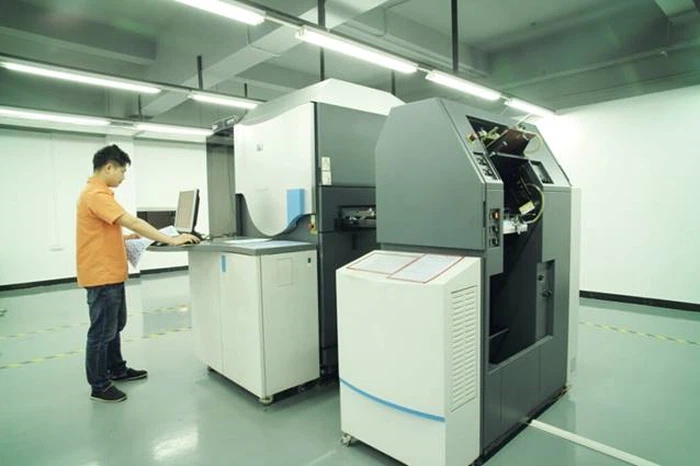
We own advanced digital printing machine and high speed printing 4 color machine, which meet every printing requirement.
Custom service
We provide solutions for individuals and organizations that require custom printed plastic cards for Gift, Loyalty, ID, Access, Product Info, Membership and anything else you can think of.
High quality
We produces the highest quality cards, made from durable PVC plastic. We ensure all your plastic cards look spectacular through many months of hard usage.
24H online service
All enquiry emails will be replied within 12hours. We work on holidays too, even Christmas. We will keep you posted by each stage of your order like: processing, ready to ship, shipping and package tracking service.


What is a Smart Card
A smart card is a physical card that has an embedded integrated chip that acts as a security token. Smart cards are typically the same size as a driver's license or credit card and can be made out of metal or plastic. They connect to a reader either by direct physical contact -- also known as chip and dip -- or through a short-range wireless connectivity standard such as radio-frequency identification (RFID) or near-field communication.
Benefits of Smart Card
Cashless transactions
Smart cards can be used as prepaid top-up cards, allowing students to purchase everything from snacks to stationery without carrying cash. Less cash on campus means less risk of theft, and cashless transactions also reduce queuing times in shops and cafeterias. This also creates a great benefit in the fight against coronavirus, as contactless transactions can help reduce the spread of the virus.
Stronger security
Smart cards provide a higher level of security than magnetic stripe cards because they contain microprocessors capable of processing data directly without remote connections. Even memory-only smart cards can be more secure because they can store more authentication and account data than traditional mag stripe cards. Smart cards are generally safe against electronic interference and magnetic fields, unlike magnetic stripe cards.


Information persistence
Once information is stored on a smart card, it can't be easily deleted, erased or altered. That is why smart cards are good for storing valuable data that should not be reproduced. However, applications and data on a card can be updated through secure channels, so issuers do not have to issue new cards when an update is needed.
Greater storage capabilities
The storage capabilities of smart cards differ. However, most versions can hold between 1KB and 256KB. This is considerably more than a standard magnetic stripe card. As a result, they can also accommodate greater encryption capabilities. As you load information onto a smart card, it becomes difficult to edit or erase. This is what makes them a great option for such a wide range of uses and functions within a business environment.
Types of Smart Card
Contact smart cards are the most common type of smart card. They are inserted into a smart card reader that has a direct connection to a conductive contact plate on the surface of the card. Commands, data and card status are transmitted over these physical contact points.
Require only close proximity to a card reader to be read; no direct contact is necessary. The card and the reader are both equipped with antennae and communicate using radio frequencies over a contactless link. The antennae are often a copper wire that wraps around the edge of the card.
Are equipped with both contactless and contact interfaces. This type of card enables secure access to the smart card's chip with either the contactless or contact smart card interfaces.
Contain more than one smart card technology. For example, a hybrid smart card might have an embedded processor chip that is accessed through a contact reader and an RFID chip for proximity connection. The different chips may be used for different applications linked to a single smart card -- for example, when a proximity chip is used for physical access control to restricted areas and a contact chip is used for SSO authentication.
Material of Smart Card
PVC Cards (Polyvinyl Chloride)
It is the most economical material and it is a compound that is 100% PVC. They are ideal for identification, or the printing of cards with a shorter life, their personalization is recommended to be through sublimation because printers that require heat to transfer ink could affect the quality of the plastic and the printing .
PET (Polyethylene)
They are usually cards with PVC and PET materials, this mixture is composed of 60% PVC and 40% PET, the above generates a flexible, heat-resistant material, ideal for thermal re-transfer printers or that use hot lamination methods
Degradable and recycled plastics
PVC made of an additive film that makes it degradable, this additive accelerates the degradation of plastics with a high density of microbes such as those found in the soil.
Hybrid metallic
This is a card made with overlays (the outer layers) of PVC, inside it has a metallic core to generate the weight, feel and sound of a metallic card.
What are the Applications of Smart Card
Information technology Businesses, the government, and healthcare organizations continue to move towards storing and releasing information via networks, Intranets, extranets, and the Internet. These organizations are turning to smart cards to make this information readily available to those who need it while at the same time protecting the privacy of individuals and keeping their informational assets safe from hacking and other unwanted intrusions.
Banking & Retail Smart banking cards can be used as credit, direct debit or stored value cards, offering a counterfeit- and tamper-proof device. The intelligent microchip on the card and the card readers use mutual authentication procedures that protect users, merchants and banks from fraudulent use. Other services enabled by smart cards are advanced loyalty programs and electronic coupons.
Electronic purse A smart card can be used to store a monetary value for small purchases. Card readers retrieve the amount currently stored, and subtract the amount for the goods or services being purchased. Radio-read smart cards will allow the free flow of people through transportation systems, avoiding the need of ticketing machines or validation gates.
Health care Smart cards allow the information for a patient's history to be reliably and safely stored. Health care professionals can instantaneously access such information when needed, and update the content. Instant patient verification allows immediate insurance processing and refund. Doctors and nurses themselves can carry smart card-based IDs that allow secure, multi-level access to private information.
ID Verification and access control The computational power of smart cards allows running mutual authentication and public-key encryption software in order to reliably identify the bearer of the card. For higher security needs, a smart card is a tamper-proof device to store such information as a user's picture or fingerprints. Smart cards can be used also for network access: in addition or in alternative to user IDs and passwords, a networked computer equipped with a smart card reader can reliably identify the user.
Commercial applications Smart cards also benefit many business applications in B2B and B2C environments. In addition, the smart card's portability and ability to be updated make it a technology well-suited for connecting the virtual and physical worlds and multi-partner card programs.
Process of Smart Card
Designing: First of all, the programmer and designer prepare a prototype of the card. The operating system, chip memory, data type, design is prepared at the first step.
Fabrication of chip: After designing and programming of the chip and card is done, the chip is embedded and glued onto the card. This chip is made up of silicon which will store confidential data of the holder. The card on which the chip is glued is usually made up of synthetic plastic or PVC.
Coding: This is the step when the chip is programmed to perform the function it is meant to perform. The code is entered into the chip memory. Later, this code will instruct and communicate with the reader to perform further functions.
Loading Data: Now comes the final stage where the confidential data is loaded into the chip memory. This data will be used by the reader to identify cardholders.
What you should know when use Smart Card
Keep your smart card secure
Always keep your smart card in a safe and secure place. Do not lend or give your card to anyone, and do not share your PIN or password with anyone.
Choose a strong PIN
When you activate your smart card, you will need to choose a PIN or password. Use a strong PIN that is difficult to guess and don't use a PIN that you have used before.
Understand your card's features
Smart cards come with different features such as online payments, accessing secure facilities, and cash withdrawals. Make sure you understand and use these features appropriately.
Keep your card updated
If your personal or contact information changes, be sure to update your card. This will ensure that you receive notifications and alerts from your card issuer.
Keep track of your transactions
Check your account balance and transaction history regularly to ensure that your transactions are accurate and up-to-date.
Use secure devices
When using your smart card, make sure you are using a secure and trusted device. Avoid using public computers or Wi-Fi networks to access your card information.
Certifications

Our Factory
With a focus on providing high-quality PVC card products and services to customers across the globe, our range of products covers a wide spectrum of industries ranging from identity and transportation to smart key, smart charging, education, payment and customer loyalty.



FAQ
Q: What are the basics of smart card?
Q: What is a common example of a smart card?
Examples of smart card applications include the following: Payment cards, including debit and credit cards issued by commercial credit card companies and banks, are used for financial transactions.
Q: What types of information might be stored on a smart card?
Q: How does smart card work?
Q: What are the advantages and disadvantages of a smart card?
Q: What is the conclusion of smart card?
Q: Is smart card a storage device?
Q: What are the future uses of smart cards?
Q: Who uses smart cards?
Q: What is the durability of a smart card?
Q: Is a smart card a debit or credit card
Q: What is the difference between smart card and NFC?
Q: What is a Smartcard?
Q: The most relevant applications of smartcards can be categorized in the following way:
Loyalty and stored value: Smart cards are used as a tool of stored value, particularly in loyalty programs across various sectors like transportation, parking, and retail, which track data and offer incentives to hold onto their customer base.
Securing digital information and physical assets: In addition to providing information security, smartcards are also used to safeguard services and equipment by restricting access only to permitted users. Delivery of digital information and entertainment services is encrypted and decrypted via the smart card of each subscriber base. Smart cards have also proved to be useful tools for machine and equipment settings in sensitive laboratories.
E-commerce: Smart cards facilitate the process of e-commerce transactions by enabling consumers to securely store relevant information about purchases. For instance, the smart card stores details of personal accounts like credit balance as well as preferences and purchasing trends of consumers. Smart cards can be used for micro-payments as well as for management of expenses.
Q: Security technology in smart card
Communication with the outside world, such as interaction with a reader, access controller, or server Hardware security — these smart cards (or rather their chips) are installed on sensitive equipment and monitor the environment for risks.
Operating system — these are the smart cards that contain authentication information and that you can use for multi-factor authentication in a smart card security system.
Markets that have been traditionally using machine-readable card technologies like barcodes and magnetic stripes are increasingly adopting the use of smart cards. This conversion is done after the return on investment is accounted for by each card user year after year. Smart cards are most often used in applications which strictly require security and substantiation.
Q: Does smart card store information?
Q: Can smart cards be tracked?
Q: How reliable is a smart card?
Q: Do people still use smart cards?
Q: What is the future of smart card?
Shenzhen Razlon Technology Co., Ltd. is one of the most professional smart card manufacturers and suppliers in China, specialized in providing high quality customized service. If you're going to buy or wholesale bulk smart card in stock, welcome to get quotation and free sample from our factory. For price consultation, contact us.