

Why Choose Us
Advanced equipment
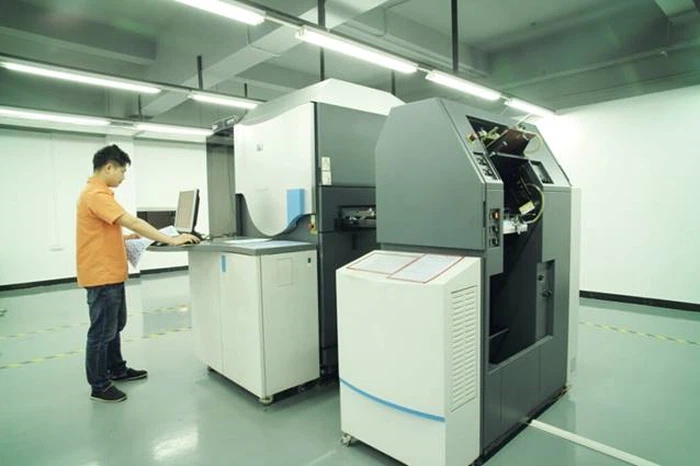
We own advanced digital printing machine and high speed printing 4 color machine, which meet every printing requirement.
Custom service
We provide solutions for individuals and organizations that require custom printed plastic cards for Gift, Loyalty, ID, Access, Product Info, Membership and anything else you can think of.
High quality
We produces the highest quality cards, made from durable PVC plastic. We ensure all your plastic cards look spectacular through many months of hard usage.
24H online service
All enquiry emails will be replied within 12hours. We work on holidays too, even Christmas. We will keep you posted by each stage of your order like: processing, ready to ship, shipping and package tracking service.


What is a RFID Tag
RFID tags are a type of tracking system that uses radio frequency to search, identify, track, and communicate with items and people. Essentially, RFID tags are smart labels that can store a range of information from serial numbers, to a short description, and even pages of data. Some RFID tags include cryptographic security features for a high level of verification and authentication. RFID tags are usually identified by their radio frequencies: low frequency (LF), high frequency (HF), and ultra-high frequency (UHF).
Benefits of RFID Tag
Improved inventory management RFID technology can help businesses improve inventory management. With RFID tags, businesses can track inventory levels in real-time, reduce inventory losses, and automate the inventory management process. RFID technology provides businesses with accurate inventory counts, which reduces the chances of overstocking or stockouts. The technology can also help businesses identify the location of specific items, which can save time and reduce the cost of searching for misplaced items.
Enhanced supply chain visibility RFID technology can provide businesses with enhanced supply chain visibility. It can help businesses track goods throughout the supply chain, from the point of origin to the point of consumption. This allows businesses to identify bottlenecks in the supply chain, improve delivery times, and reduce the risk of lost or stolen goods. RFID technology also helps businesses to comply with regulations and standards related to product tracking and tracing.
Increased efficiency and productivity RFID technology can increase efficiency and productivity in businesses. The technology allows businesses to automate processes, reducing the need for manual labor. RFID tags can be used to track products and materials as they move through the production process, enabling businesses to optimize production flow and reduce lead times. RFID technology can also help businesses to reduce errors and improve the accuracy of data collection.
Improved customer experience RFID technology can improve the customer experience by providing businesses with real-time visibility into inventory levels. With RFID technology, businesses can provide customers with accurate information about product availability and delivery times. This helps businesses to improve customer satisfaction and loyalty. RFID technology can also help businesses to reduce the time customers spend waiting in line, leading to a better customer experience.
Enhanced security RFID technology can enhance security in businesses. The technology can be used to track access to secure areas, identify and track valuable assets, and prevent theft. RFID tags can also be used to prevent counterfeiting by verifying the authenticity of products.
Reduced operational costs RFID technology can help businesses reduce operational costs. The technology can help businesses to automate processes, reducing the need for manual labor. RFID technology can also help businesses to reduce inventory losses and improve supply chain efficiency, leading to cost savings. With RFID technology, businesses can also reduce the cost of manual data collection and improve the accuracy of data.
Types of RFID Tag
Passive RFID tags
These tags do not have their own power source and rely on the energy emitted by the RFID reader to power up and transmit their data.
Active RFID tags
These tags have their own power source and can transmit their data over a longer distance than passive RFID tags.
Semi-passive RFID tags
These tags have a power source, but it is only used to boost the signal, they transmit their data when they are in the proximity of an RFID reader.
Near-field communication (NFC) tags
These tags are a type of passive RFID tag that operate at a frequency of 13.56 MHz and can only be read at a very close range, typically a few centimeters.
Ultra high frequency (UHF) RFID tags
These tags operate at a frequency of 860-960 MHz and can be read from farther away than other types of RFID tags.
Microwave RFID tags
These tags operate at a frequency of 2.4 GHz, they are similar to UHF tags but with a longer read range.
What are the Applications of RFID Tag

01.RFID for industrial applications
02.Aerospace
03.Healthcare and medical industry
04.Production
05.Warehousing in the food industry and distribution centers
06.Meat processing plants
Components of RFID Tag
RFID chip (IC)
The RFID chip, otherwise known as IC (short for Integrated Circuit), is usually designed and manufactured by semiconductor manufacturers. It is a small microprocessor, which has a logic unit that makes decisions and provides memory to store data.Integrated circuits need the power to operate. This power can come from the battery on the tag (in the active tag) or the radio energy radiated by the interrogator’s antenna (in the passive tag). Part of the integrated circuit is used to control the power supply.
RFID tag antenna
The RFID tag antenna is a kind of communication induction antenna connected with the tag integrated circuit, which is an important part of RFID tag transponder. The antenna receives the signal from the interrogator, then transmits or reflects the received signal according to the type of tag. For active tags, it transmits signals; for semi-passive or passive tags, it reflects the signals. For passive tags, the antenna also collects energy from the radio waves and feeds the integrated circuit.
RFID tag substrate
The RFID tag substrate is a carrier that holds the RFID chip and antenna together. The tag antenna is deposited or printed on the substrate, and the IC is then attached to this antenna. Substrates are usually made of flexible materials such as PVC,PET, Paper, but can also be made of rigid materials like PCB.
RFID tag encapsulation
There are many packaging forms of RFID tags, and they are not restricted by size and standard shape, and their composition is also different. Therefore, packaging processes such as antenna manufacturing, bump formation, chip bonding, and interconnection are also diverse.
What you should know when use RFID Tag
Choose the right type of tag
There are various types of RFID tags available based on their frequency, read range, and memory storage capacity. You need to choose the appropriate tag for your specific application.
Ensure proper placement
The position of the tag on an object can affect its readability and accuracy. Make sure the tag is placed correctly, and there are no physical barriers that potentially obstruct the transmission of radio waves.
Test the tags before deployment
It's crucial to test the tags before deployment to ensure that they are working as expected and providing accurate data.
Ensure proper maintenance
Proper maintenance is essential to keep your RFID system running smoothly. Regularly inspect the tags and reader equipment to ensure that they are functioning correctly.
Certifications

Our Factory
With a focus on providing high-quality PVC card products and services to customers across the globe, our range of products covers a wide spectrum of industries ranging from identity and transportation to smart key, smart charging, education, payment and customer loyalty.



FAQ
Q: What you should know about RFID tags?
Q: What are the challenges of RFID tags?
Reader collision. Reader collision, when a signal from one RFID reader interferes with a second reader, can be prevented by using an anti-collision protocol to make RFID tags take turns transmitting to their appropriate reader. Tag collision.
Q: Where should you avoid placing RFID tags?
Q: What causes RFID to fail?
Q: Do RFID tags interfere with each other?
Q: Can RFID tags track location?
Q: What data do RFID tags collect?
Q: What is the lifespan of RFID tags?
Because of the battery life, active RFID tags have a lifespan of about three to five years (Smiley). They are too small to repair or recharge the battery, so they are often replaced.
Q: Can RFID tags fail?
Q: Should I worry about RFID?
Q: Do cell phones affect RFID?
Q: Which of the following can be tracked by using the RFID tags?
Q: Can a RFID tag be turned off and on?
Q: Why do RFID tags stop working?
Q: Can I install RFID myself?
Q: What is the difference between NFC and RFID?
Q: Do RFID set off alarms?
Q: How do you test a RFID tag?
Q: What does RFID detect?
Q: How far do RFID tags read?
Shenzhen Razlon Technology Co., Ltd. is one of the most professional rfid tag manufacturers and suppliers in China, specialized in providing high quality customized service. If you're going to buy or wholesale bulk rfid tag in stock, welcome to get quotation and free sample from our factory. For price consultation, contact us.